
Rural Competence Network: Traditional crop varieties and livestock breeds
AgroBioCom
Traditional crop varieties and livestock breeds are important elements of biodiversity. These genetic diversity is vital for adaptation of animal breeds and crops to changing environments and climate change. Unfortunately, the substitution of landraces with high producing varieties has led to a dramatic reduction of these biodiversity. The Erasmus+ funded AgroBioCom project will contribute to the conservation by sustainable use through the development of vocational competences of farmers, rural entrepreneurs and regional coordinations. Workshops about regional value chains, market access and food tourism and availability of resources will enable the development work.
News
AgroBioCom Curriculum for Vocational Schools
on Availability and Cultivation (December 2025)
"Availability and cultivation of traditional crops and breeds
as nature capital for rural innovation and regional awareness"
December 2025

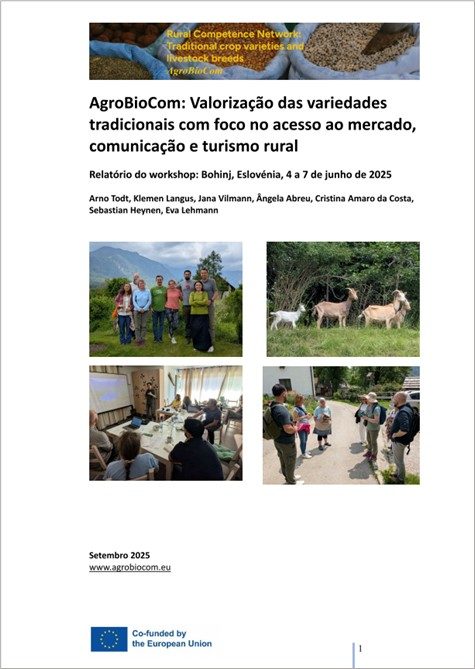
AgroBioCom Bohinj Report in Portuguese (February 2026)
"Valorização das variedades tradicionais com foco no acesso ao mercado, comunicação e turismo rural"
February 2026

April 2026
São Pedro do Sul, Portugal, 17. - 19. April 2026:
23. Feira Laranja (Orange Fair)
The fair will offer an interesting variety of oranges, orange-based local products and typical dishes featuring oranges. The parish of Valadares / S. Pedro do Sul has a microclimate that allows the cultivation of high quality oranges, which have become a hallmark of the municipality.
Julian Alps Biosphere Reserve (Triglav region), Slovenia
Project Partners


Bio Região São Pedro do Sul (Centro region), Portugal
Upper Lusatian Heath and Pond Landscape
Biosphere Reserve, Germany
Biosphere Reserve Administration at Staatsbetrieb Sachsenforst



Disclaimer: Funded by the European Union. Views and opinions expressed are however those of the author(s) only and do not necessarily reflect those of the European Union or the European Education and Culture Executive Agency (EACEA). Neither the European Union nor EACEA can be held responsible for them.
This work is licensed under Creative Commons Attribution-ShareAlike 4.0 International
